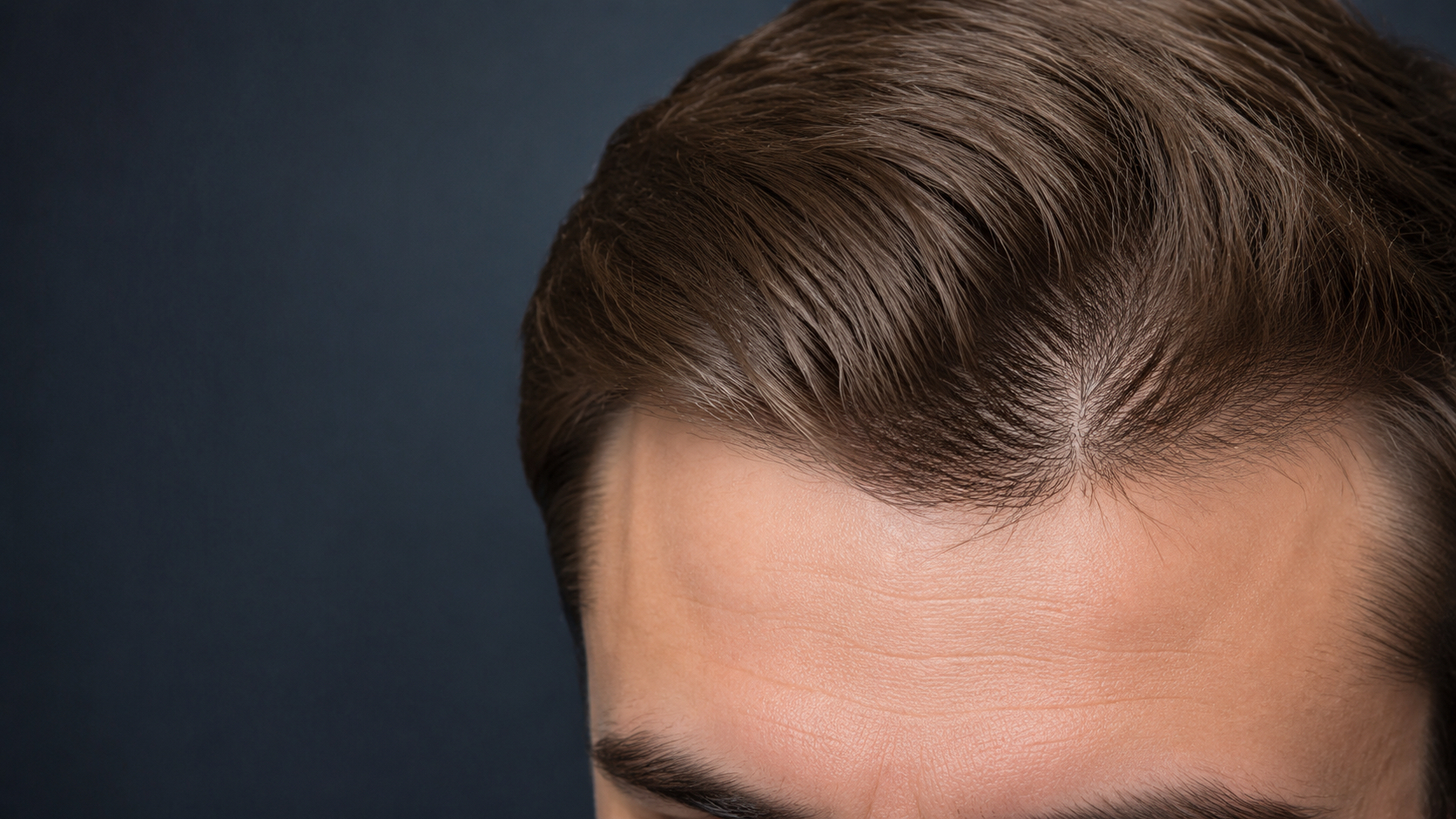
A cowlick can be one of the most distinctive features of a person’s hairline. It may sweep to one side, rise at the front or create a small area where the hairs change direction.
Although some people see a cowlick as an imperfection, it is often part of what makes a hairline look natural. When planning a hair transplant, the goal should not automatically be to remove it. In many cases, the best result comes from understanding, respecting and carefully restoring its natural pattern.
What is a cowlick?
A cowlick is an area where the hair grows in a different direction from the surrounding hair. At the frontal hairline, the hairs may curve, fan out, cross over or rise more vertically before settling into the general flow of the hairstyle.
This pattern is usually determined by the natural orientation of the hair follicles beneath the skin. It is not simply a styling habit, and it cannot always be changed by brushing the hair in another direction.
Cowlicks may be subtle or very obvious. They can occur centrally, near one temple or on either side of the frontal hairline. They can also become more noticeable as the surrounding hair thins.
This is akin to the crown spiral, or whorl and was first described in a paper in 1989.
Why cowlicks matter in hair transplantation
Creating a natural hair transplant is not only about the number of hairs implanted. Each follicle must also be placed at the correct angle, direction and depth.
This becomes particularly important around a cowlick, where the direction can change within a very small area. If transplanted hairs are placed in a uniform, template-like direction, they may conflict with the patient’s existing pattern. The result can appear stiff, unnatural or difficult to style.
A well-planned transplant should consider:
● the direction of the existing hairs
● how the pattern changes across the cowlick
● the exit angle of the hairs from the skin
● the calibre and number of hairs in each follicular unit
● the patient’s preferred hairstyle
● how future hair loss may affect the appearance of the area
Respecting the original pattern
Whenever possible, I prefer to preserve a patient’s natural hairline characteristics rather than replace them with a standardised design.
If a cowlick remains visible, it provides valuable information about the patient’s original hair direction. This can guide the placement of transplanted follicles so the new hair blends with the existing pattern.
In some cases, the cowlick can be strengthened and reconstructed. In others, it may need to be softened or subtly modified to improve styling. The appropriate approach depends on the remaining hair, the degree of loss and the patient’s goals.
Why single-hair follicles are important
The very front of a natural hairline is usually created with carefully selected single-hair follicular units. These finer follicles help produce a soft transition from the forehead into the denser hair behind.
Around a cowlick, single hairs also allow more precise control of direction and flow. Larger multi-hair grafts placed too close to the leading edge can make the hairline look coarse or artificial—particularly where the pattern changes direction.
A cowlick can help create individuality
Perfectly straight and symmetrical hairlines are uncommon in nature. Small variations in shape, density and direction often make a hairline believable.
A cowlick can add character and individuality. When reconstructed carefully, it may help the transplanted hairline look like the patient’s own hair—not a generic hairline placed onto them.
Can a cowlick be changed?
It can sometimes be softened or redirected to a degree, but this must be planned cautiously. Newly transplanted hairs can be implanted in a chosen direction, while existing hairs will continue to follow their original growth pattern.
Trying to force a completely different direction may create competing hair flows. For this reason, modification is often more successful when it works with the natural pattern rather than against it.
Hairline design should be individual
There is no single ideal hairline for every patient. Age, facial proportions, donor supply, existing hair direction and the likely progression of hair loss all need to be considered.
At Young Hair Restoration, every hairline is personally assessed and designed by Dr Wayne Young. Where a cowlick is present, its shape and directional changes are incorporated into the surgical plan. The procedure is 100% doctor performed, including the creation of the recipient sites and placement of the transplanted follicles.
The objective is not simply to fill an area with hair. It is to create natural direction, flow and long-term balance.
Considering a hairline transplant?
If you have a cowlick or an unusual frontal growth pattern, an in-person assessment allows the hair direction, density, calibre and donor area to be examined properly. Photographs alone may not show the fine directional changes that influence surgical planning.
Young Hair Restoration does not use a one-size-fits-all hairline or quote procedures from photographs. Each treatment plan is developed during a doctor consultation based on the individual patient’s anatomy, existing hair and long-term needs.
All medical procedures carry risks. Results vary between individuals, and suitability can only be determined following a medical consultation.
Although some people see a cowlick as an imperfection, it is often part of what makes a hairline look natural. When planning a hair transplant, the goal should not automatically be to remove it. In many cases, the best result comes from understanding, respecting and carefully restoring its natural pattern.
What is a cowlick?
A cowlick is an area where the hair grows in a different direction from the surrounding hair. At the frontal hairline, the hairs may curve, fan out, cross over or rise more vertically before settling into the general flow of the hairstyle.
This pattern is usually determined by the natural orientation of the hair follicles beneath the skin. It is not simply a styling habit, and it cannot always be changed by brushing the hair in another direction.
Cowlicks may be subtle or very obvious. They can occur centrally, near one temple or on either side of the frontal hairline. They can also become more noticeable as the surrounding hair thins.
This is akin to the crown spiral, or whorl and was first described in a paper in 1989.
Why cowlicks matter in hair transplantation
Creating a natural hair transplant is not only about the number of hairs implanted. Each follicle must also be placed at the correct angle, direction and depth.
This becomes particularly important around a cowlick, where the direction can change within a very small area. If transplanted hairs are placed in a uniform, template-like direction, they may conflict with the patient’s existing pattern. The result can appear stiff, unnatural or difficult to style.
A well-planned transplant should consider:
● the direction of the existing hairs
● how the pattern changes across the cowlick
● the exit angle of the hairs from the skin
● the calibre and number of hairs in each follicular unit
● the patient’s preferred hairstyle
● how future hair loss may affect the appearance of the area
Respecting the original pattern
Whenever possible, I prefer to preserve a patient’s natural hairline characteristics rather than replace them with a standardised design.
If a cowlick remains visible, it provides valuable information about the patient’s original hair direction. This can guide the placement of transplanted follicles so the new hair blends with the existing pattern.
In some cases, the cowlick can be strengthened and reconstructed. In others, it may need to be softened or subtly modified to improve styling. The appropriate approach depends on the remaining hair, the degree of loss and the patient’s goals.
Why single-hair follicles are important
The very front of a natural hairline is usually created with carefully selected single-hair follicular units. These finer follicles help produce a soft transition from the forehead into the denser hair behind.
Around a cowlick, single hairs also allow more precise control of direction and flow. Larger multi-hair grafts placed too close to the leading edge can make the hairline look coarse or artificial—particularly where the pattern changes direction.
A cowlick can help create individuality
Perfectly straight and symmetrical hairlines are uncommon in nature. Small variations in shape, density and direction often make a hairline believable.
A cowlick can add character and individuality. When reconstructed carefully, it may help the transplanted hairline look like the patient’s own hair—not a generic hairline placed onto them.
Can a cowlick be changed?
It can sometimes be softened or redirected to a degree, but this must be planned cautiously. Newly transplanted hairs can be implanted in a chosen direction, while existing hairs will continue to follow their original growth pattern.
Trying to force a completely different direction may create competing hair flows. For this reason, modification is often more successful when it works with the natural pattern rather than against it.
Hairline design should be individual
There is no single ideal hairline for every patient. Age, facial proportions, donor supply, existing hair direction and the likely progression of hair loss all need to be considered.
At Young Hair Restoration, every hairline is personally assessed and designed by Dr Wayne Young. Where a cowlick is present, its shape and directional changes are incorporated into the surgical plan. The procedure is 100% doctor performed, including the creation of the recipient sites and placement of the transplanted follicles.
The objective is not simply to fill an area with hair. It is to create natural direction, flow and long-term balance.
Considering a hairline transplant?
If you have a cowlick or an unusual frontal growth pattern, an in-person assessment allows the hair direction, density, calibre and donor area to be examined properly. Photographs alone may not show the fine directional changes that influence surgical planning.
Young Hair Restoration does not use a one-size-fits-all hairline or quote procedures from photographs. Each treatment plan is developed during a doctor consultation based on the individual patient’s anatomy, existing hair and long-term needs.
All medical procedures carry risks. Results vary between individuals, and suitability can only be determined following a medical consultation.